
THINK: The user wants me to rewrite a title in Argentinian Spanish. The original title is: “Clara Brugada invita a la clase de futbol más grande en CDMX para buscar un Récord Guinness”

Key elements to adapt for Argentinian Spanish:

  • “Clase de fútbol”: In Argentina, it’s common to say “clase de fútbol” or “entrenamiento de fútbol”. “Clínica de fútbol” is also used sometimes for a specific type of event, but “clase” is generally understood.
  • “más grande”: “más grande” is perfectly fine.
  • “CDMX”: This is the acronym for Mexico City. In Argentina, we would specify “en la Ciudad de México” or simply “en CABA” (if it were Buenos Aires) or “en la ciudad” if context allowed. Since it’s an event happening in CDMX, I need to convey that location for an Argentinian audience. I can keep “CDMX” if it’s generally understood as a city name, or translate it more explicitly. Given the context, “en CDMX” might feel a bit out of place for an Argentine reader who doesn’t constantly see that acronym. I’ll make it more generic or descriptive of a city. However, the user asked to rewrite the title, not to change the factual information (that it’s in CDMX). So, I should keep “CDMX” but think if there’s a more common way to refer to a city event in a title.
  • “buscar un Récord Guinness”: “buscar un Récord Guinness” is perfectly fine. “Ir por un Récord Guinness” is also common.

Let’s try some options:

  1. Direct translation with minor adjustments: “Clara Brugada invita a la clase de fútbol más grande en CDMX para buscar un Récord Guinness.” (This is almost identical, just confirming it sounds natural). “Clase de fútbol” is fine. “más grande” is fine. “buscar un Récord Guinness” is fine. “en CDMX” is the only part that might sound foreign. For an Argentine audience, one might say “en la Ciudad de México” or, if the event was local, “en la Ciudad”. However, since the source specifies “CDMX”, I should retain that geographical reference. If I were to make it more “Argentine” in tone, I might phrase the location differently or omit it if it were a local event already understood. But here, “en CDMX” is a factual locator.

  2. Focus on making it sound more natural for a title:

    • Instead of “clase de fútbol”, maybe “entrenamiento de fútbol” or “clínica de fútbol” but “clase” is perfectly understandable.
    • “para buscar un Récord Guinness” is good. “para ir por un Récord Guinness” is also good.

Let’s stick with minimal changes that make it sound more natural for an Argentine title while retaining all original meaning.

“Clara Brugada invita a la clase de fútbol más grande en CDMX para buscar un Récord Guinness”

If I want to “argentinizar” it subtly without changing the core meaning:

  • “Invita a” is good.
  • “Clase de fútbol” is good.
  • “Más grande” is good.
  • “En CDMX” – This is the sticky point. If I were writing this title for Argentina about an event in Argentina, I’d say “en Buenos Aires”, “en la Ciudad”, etc. But since the event is in CDMX, I shouldn’t remove that fact. The acronym “CDMX” might be less common knowledge for the average Argentine reader than “Ciudad de México”, but it’s often seen in international news. If the goal is “Argentine Spanish”, maybe “Ciudad de México” would be slightly more universally understood than just “CDMX”, even though “CDMX” is used.

Let’s consider verb choice:

  • “Invita a” (invites to) is fine.
  • “Convoca a” (convenes for) could also be used, giving a slightly more formal or event-focused tone, but “invita” is perfectly natural.

Let’s try to find the most idiomatic title phrasing. “Clara Brugada convoca a la clase de fútbol más grande en CDMX para ir por un Récord Guinness.” This sounds quite natural. “Convoca” can feel slightly more appropriate for a large public event than “invita” (though both are fine). “Para ir por un Récord Guinness” is very common in Argentina.

However, the user asked for one option. I should go for the most direct and natural feeling without overthinking it too much, ensuring it sounds like something you’d read in an Argentine newspaper.

“Clara Brugada invita a la clase de fútbol más grande en CDMX para buscar un Récord Guinness.” This is already very close. “Buscar un Récord Guinness” is completely fine. “Ir por un Récord Guinness” is also good.

Let me try to think of a phrasing that’s unmistakably “Argentine”. Often, for large events, we use “convoca” instead of “invita” but “invita” is not wrong. “La clase de fútbol más grande” is fine.

Let’s compare: Original: “Clara Brugada invita a la clase de futbol más grande en CDMX para buscar un Récord Guinness” Option 1 (minimal change, feels natural): “Clara Brugada invita a la clase de fútbol más grande en CDMX para buscar un Récord Guinness.” (just adding tilde). Option 2 (slight argentine nuance): “Clara Brugada convoca a la clase de fútbol más grande en CDMX para ir por un Récord Guinness.”

Given the instruction “reescribí el título… en español de Argentina”, I should make some change beyond just the tilde, if possible, to really capture the “Argentine” feel. “Para ir por un Récord Guinness” is a very common and natural phrasing in Argentina. “Convoca” also fits well for a public event.

Let’s go with the option that includes “convoca” and “ir por”.

Final check:

  • “Clara Brugada”: Name, stays.
  • “invita a”: Could be “convoca a” for a large event.
  • “la clase de futbol más grande”: “la clase de fútbol más grande” (add tilde). “Clase de fútbol” is good.
  • “en CDMX”: Location, stays. “en Ciudad de México” would be more explicit but “en CDMX” is also used in headlines. I’ll keep CDMX as it’s part of the original title’s succinctness.
  • “para buscar un Récord Guinness”: “para ir por un Récord Guinness” is a very common Argentine phrasing.

So, combining these: “Clara Brugada convoca a la clase de fútbol más grande en CDMX para ir por un Récord Guinness.” This sounds very natural and idiomatic for Argentina.Clara Brugada convoca a la clase de fútbol más grande en CDMX para ir por un Récord Guinness.

En Deportes
marzo 15, 2026

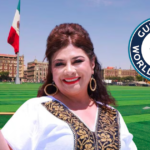
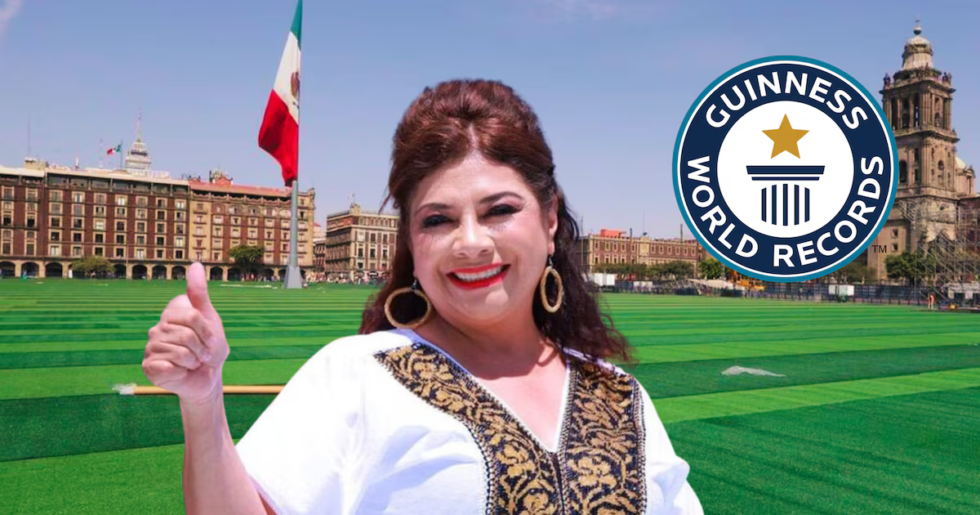
Este domingo 15 de marzo, el Zócalo de la Ciudad de México dejará de ser plaza para convertirse en la cancha de fútbol más grande del planeta. La jefa de Gobierno, Clara Brugada, encabezarán una clase masiva de futbol.

El objetivo es que México buscará pulverizar el Récord Guinness vigente, que actualmente pertenece a Estados Unidos con apenas mil 38 participantes. La meta: reunir a 15 mil personas en el corazón del país.

La dinámica es sencilla pero monumental. Durante aproximadamente 35 minutos divididos en siete bloques de ejercicios, los asistentes seguirán una rutina guiada por instructores capacitados.

No es un partido ni un espectáculo pasivo: cada participante deberá mantenerse activo durante toda la sesión para que el récord pueda ser validado por los jueces de Guinness World Records.

Los interesados en participar deben ingresar al Zócalo entre las 8:00 y las 9:30 horas, portar su número con chip de registro —que acredita su participación— y, como incentivo adicional, recibirán un balón de obsequio.

La participación es completamente gratuita, aunque requiere registro previo a través de los portales del Instituto del Deporte de la Ciudad de México (INDEPORTE) o del Gobierno capitalino.

El evento no surge de improviso. Desde noviembre de 2025, el Instituto del Deporte de la Ciudad de México ha organizado más de 70 entrenamientos masivos en distintos puntos de la capital, con una participación acumulada de más de 10 mil personas que ya conocen y practican la rutina oficial. La ciudad lleva meses calentando motores.

El evento es parte del concepto de Mundial Social impulsado por el Gobierno de México, una visión que busca que la Copa del Mundo 2026 no quede encerrada en los estadios, sino que se derrame hacia las calles, colonias y comunidades de todo el país.

La secretaria de Turismo federal, Josefina Rodríguez Zamora, subrayó además la dimensión turística del proyecto: posicionar a la Ciudad de México —que recibió más de 15 millones de visitantes en 2025— como uno de los grandes destinos globales del torneo.

Y este récord no será el único. México ya cosechó recientemente en Tuxtla Gutiérrez, Chiapas, el récord de la imagen humana de la camiseta de futbol más grande del mundo. Le seguirá un mural de fútbol de 600 metros cuadrados en La Paz, Baja California Sur. Las autoridades también adelantaron que planean intentar “la ola más grande del mundo” sobre Paseo de la Reforma.

Etiquetas: